Introduction
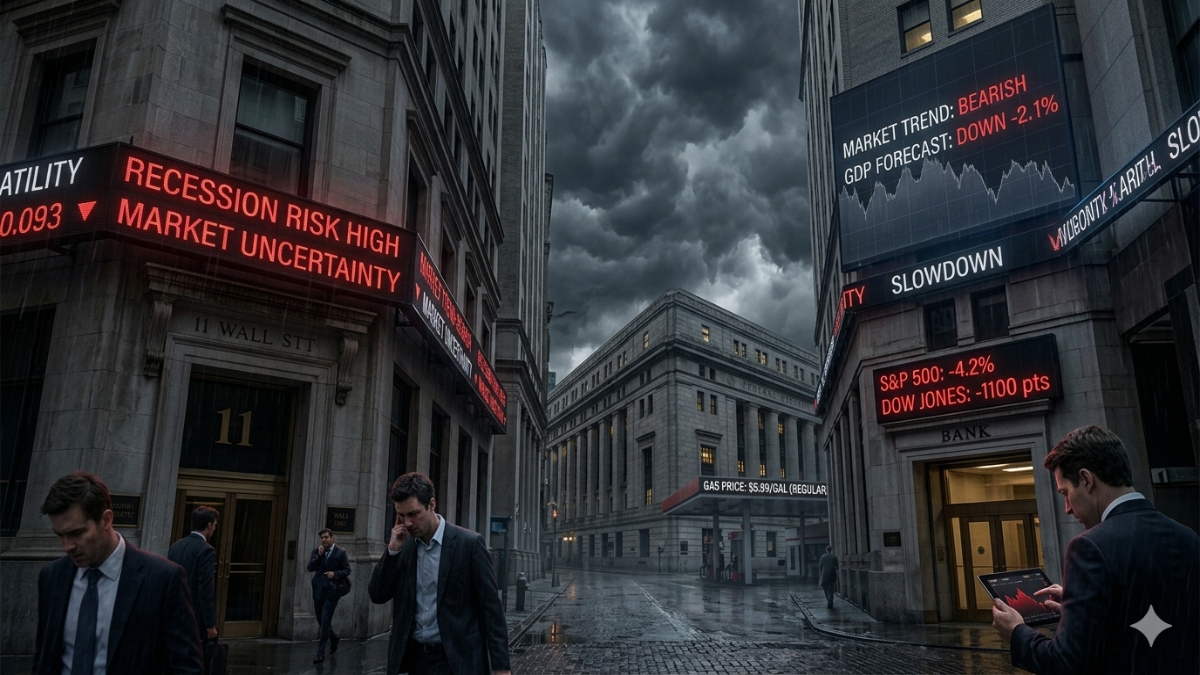
The U.S. economy, once expected to stay resilient through 2026, is showing fresh signs of slowing as inflation lingers, energy costs surge, and markets fall. New data and forecasts suggest that the odds of a recession — a significant contraction in economic activity — are climbing, with risks tied to inflation trends, jobs, and global uncertainty.
Economists now watch core indicators closely to gauge whether the U.S. will tip into recession this year — and what that would mean for American households, jobs, and markets.
Key Highlights
- Goldman Sachs now estimates a 30% chance of a U.S. recession in 2026.
- War‑driven oil price volatility and higher energy costs are still pressuring inflation.
- Fuel prices and inflation squeeze consumer budgets and spending.
- Markets have turned risk‑off, pushing equities into correction territory.
- Jobs and GDP data will be critical in determining recession timing.
Full Details: What’s Happening with the U.S. Economy
U.S. economic data in early 2026 continues to offer mixed signals. Weekly jobless claims and headline GDP figures have been relatively stable, but lagging indicators such as consumer confidence and inflation expectations tell a different story.
Energy and Inflation Pressures
Oil prices have been volatile, with benchmark crude climbing significantly over the past year due to geopolitical tensions and supply disruptions — particularly linked to the ongoing Middle East conflict. Brent crude and U.S. benchmarks have moved upward, contributing to higher fuel costs at the pump.
This energy shock feeds into broader inflation. While headline inflation has moderated from earlier peaks, the OECD recently raised its U.S. inflation forecast, expecting it to average around 4.0–4.2% in 2026, well above the Federal Reserve’s long‑term target.
Persistent inflation matters because it erodes household purchasing power and complicates the Federal Reserve interest rate guidance. A resilient jobs market and stubborn inflation reduce the Fed’s ability to cut interest rates — a traditional recession‑offset tool.
Jobs and Growth Indicators
The labor market remains a key piece of the puzzle. Some job data has shown stability, but deeper indicators reveal signs of cooling. Nonfarm payroll numbers were weaker than expected, and job growth slowed meaningfully in recent reports.
Slowing job growth could put downward pressure on consumer spending trends, which accounts for about two‑thirds of U.S. GDP. If wages fail to keep pace with rising living costs, households may cut back on discretionary purchases, slowing overall economic growth.
GDP forecasts have also shifted. While early Q1 estimates suggested modest growth, analysts warn that ongoing geopolitical tensions and energy price shocks could temper gains in incoming data releases.
Market Movements and Risk Sentiment
Equity markets have reflected economic anxiety. The S&P 500 and Nasdaq entered “correction territory,” meaning they slid more than 10% from recent highs, signaling investor risk aversion.
In risk‑off environments like this, the U.S. dollar often strengthens, which can make U.S. exports less competitive internationally and slow growth further.
What This Means for Americans
Inflation and Everyday Costs
Higher energy and commodity prices have real consequences for American households. With average gasoline prices hovering near $4.00 per gallon and food prices rising, everyday budgets are under pressure.
This squeeze hits lower‑ and middle‑income families hardest, as they spend a larger share of income on essentials like fuel, groceries, and housing. Even modest inflation can make a big difference to take‑home pay and savings.
Jobs and Wages
A cooling jobs market could mean slower wage growth or even job losses if economic conditions worsen. While unemployment hasn’t spiked sharply yet, analysts note that underemployment and labor force participation issues can mask deeper weaknesses.
Consumers feeling squeezed may pull back on big purchases like cars and homes, slowing sectors that rely on consumer financing and boosting recession risk.
Housing and Credit Costs
Mortgage rates, tied closely to Treasury yields, have drifted higher as investors price in inflation risk and Fed policy uncertainty. This makes borrowing more expensive for homebuyers and businesses, which can further cool economic activity.
Expert Analysis: Why the Risk Is Rising
Economists use multiple indicators to assess recession probability — from yield curves and GDP growth to labor market dynamics. While no single metric determines a recession, the combination of slower growth, inflationary pressures, and market volatility raises alarms.
Goldman Sachs recently raised its estimate that the U.S. will enter a recession within the next 12 months to 30%, up from prior forecasts. This uptick reflects tightening financial conditions and slower projected GDP growth.
Furthermore, the OECD’s inflation upgrade reflects global pressures that can spill over into U.S. price stability and consumer costs. Persistent inflation makes rate cuts less likely, even if economic growth slows.
While some analysts still believe a full recession is avoidable if certain conditions improve — like a rapid decline in oil prices or stronger business investment — risk remains elevated. Uncertainty about the Middle East conflict and its long‑term impact on energy markets continues to cloud forecasts.
When Might a Recession Occur? Projections & Outlook
Economists typically model recession timing using a range of indicators — from yield curves and unemployment rates to GDP growth patterns. Some forecasting models now place the probability of recession higher later in 2026, especially if inflation fails to moderate and energy disruptions persist.
Other experts emphasize that structural resilience — including robust consumer balance sheets and immigration‑linked labor force growth — could delay or soften any downturn.
Three key upcoming data points will be closely watched:
- March employment report (early April data) will show whether job gains remain solid.
- GDP figures for Q1 and Q2 will provide hard evidence on growth momentum.
- Federal Reserve communications on rate outlook could reveal policy shifts.
Conclusion
The U.S. economy stands at a crossroads in 2026. Inflation remains stubborn, energy shocks persist, and markets have weakened, pushing recession odds higher than earlier in the year. While a full downturn is not guaranteed, risks of a slowdown — and its associated impacts on jobs, spending, and daily American life — are rising.
Policymakers, investors, and households alike will be closely watching incoming data for signs of whether growth can reaccelerate or if the economy slips into contraction territory.

 Business