Introduction
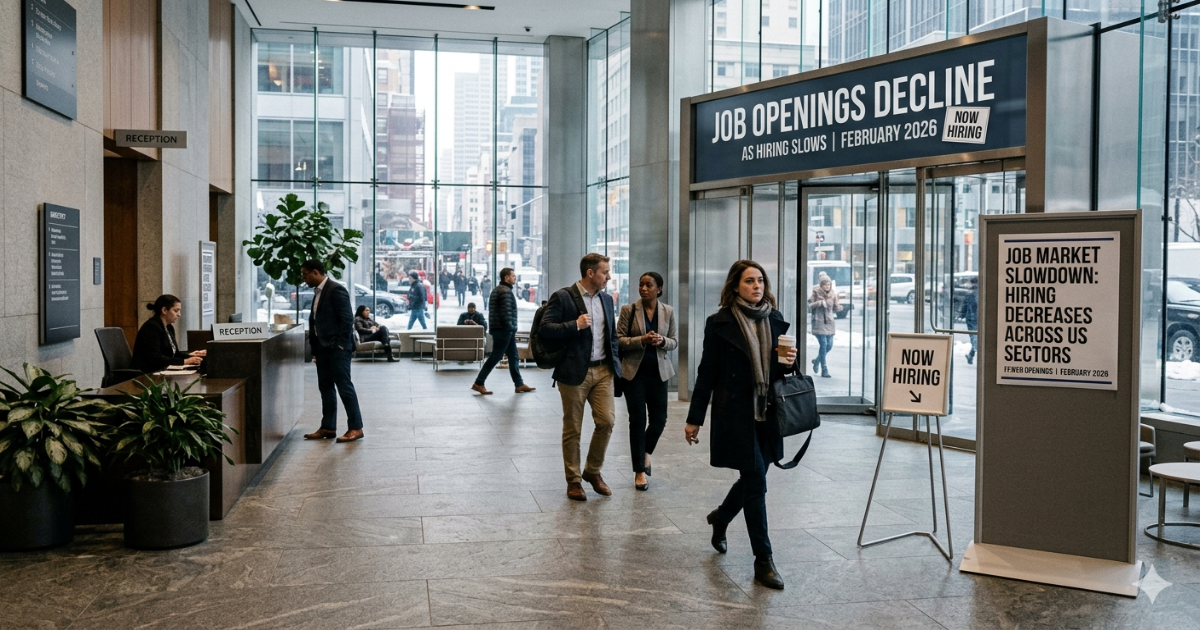
US job openings dropped in February, signaling a cooling trend in a labor market that had been unusually tight for months. According to the Bureau of Labor Statistics, vacancies fell to 6.88 million, down from January’s multi-month high of 7.24 million. Economists had expected a slight decline to 6.89 million, suggesting that employers may be adopting a more cautious approach to hiring amid economic and geopolitical uncertainties.
This moderation carries significant implications for American workers, wages, and broader economic activity, as companies adjust recruitment strategies and households anticipate potential shifts in income growth. Analysts point out that while the overall labor market remains robust, the slowdown hints at a transition from rapid expansion to strategic, targeted hiring, particularly in skill-intensive roles.
Key Highlights
- February saw US job openings drop to 6.88 million, down from January’s 7.24 million.
- The decline represents the first meaningful slowdown after months of elevated labor demand.
- Sectors most affected: retail, hospitality, and technology, while healthcare and government roles remained stable.
- Hiring moderation could influence wages, consumer spending, and inflation trends.
- Geopolitical tensions, including rising conflicts in the Middle East, may have contributed to employer caution.
Full Details
The February slowdown reflects several key factors reshaping the US labor market:
- Economic Recalibration: After months of aggressive hiring, companies are pausing to assess workforce needs. Rather than rapidly expanding, many firms are focusing on retaining existing talent and filling critical roles only.
- Sectoral Trends: Technology and retail saw reductions in openings, reflecting post-pandemic normalization. For instance, major retailers are slowing hiring after a surge in seasonal and temporary staff. Meanwhile, healthcare and public sector employment remain resilient, driven by ongoing demand for essential services. For a deeper look at industries still hiring, see Top US Industries Hiring in 2026.
- Global Influences: Rising geopolitical tensions, including the Iran conflict, add uncertainty, prompting companies to delay non-essential hiring and expansion plans.
- Labor Dynamics: With unemployment near historic lows, firms are facing tight labor supply, making it harder to fill positions and naturally slowing vacancy growth.
Data shows total hires decreased slightly, aligning with reduced openings, while wage growth remains moderate. This suggests that although fewer new roles are being created, employers continue to compete for top talent in key sectors.
Sector-specific insights:
- Retail & Hospitality: Employers are limiting new positions after high turnover during post-pandemic recovery. Wage competition remains strong in urban areas, particularly for managerial and customer-facing roles.
- Technology: Some tech companies are pausing hiring amid software demand normalization and automation adoption, but skilled roles in cybersecurity and AI remain in demand.
- Healthcare & Government: Roles remain steady due to essential public services, including hospitals, emergency care, and public administration.
- Manufacturing & Logistics: Demand shows slight moderation in traditional roles, but continues to grow in automation-driven positions.
This pattern indicates a shift toward quality over quantity, where employers prioritize filling critical roles with skilled professionals rather than broadly expanding their teams.
Historical Perspective
Comparing February 2026 to previous years highlights how unique the current slowdown is:
- In 2021–2023, job openings frequently exceeded 8 million, driven by post-pandemic recovery and strong consumer demand.
- Early 2026 saw openings peak at 7.24 million, reflecting historically high labor demand.
- The drop to 6.88 million represents a moderate but healthy cooling, not a collapse, suggesting employers are realigning hiring with economic realities rather than a market crisis.
This context reassures analysts that the US labor market is entering a stabilization phase rather than a downturn, providing opportunities for workers who focus on skill development and high-demand industries.
What This Means for Americans
The February labor report affects US citizens in multiple ways:
- Job Seekers: May face longer search periods as openings moderate, especially in retail, hospitality, and tech sectors.
- Wage Growth: Could slow in sectors with reduced demand, but high-skill roles like healthcare, IT, and renewable energy continue to see competitive salaries.
- Consumer Spending: Slower hiring may temper disposable income and confidence, impacting retail, housing, and discretionary purchases.
- Policy Implications: The Federal Reserve may use this moderation to assess interest rate decisions, balancing inflation control with employment stability.
Consumers and workers alike should watch both regional hiring trends and sector-specific openings to make informed career and financial decisions.
Expert Analysis & Unique Insights
Labor economists view February’s decline as a natural cooling after unusually high labor demand rather than a signal of recession. Augusta Saraiva, a labor market analyst, explains:
"Employers are recalibrating after months of elevated hiring. While openings fell, employment remains robust, indicating stability with a slower pace."
Additional insights:
- Remote Work & Automation: Firms are filling fewer in-person roles, leveraging hybrid work models and technology to maintain productivity.
- Skill-Intensive Focus: Growth continues in healthcare, renewable energy, and tech, emphasizing quality of roles over sheer numbers.
- Regional Disparities: Some states, including Texas and Florida, maintain strong hiring, while Midwest manufacturing hubs see reduced demand due to automation adoption.
For a more technical breakdown of labor market trends and Federal Reserve projections, see the US Labor Market Analysis by the Federal Reserve 2026.
Broader Economic Implications
- Federal Reserve Policy: A moderate labor market slowdown could influence interest rate decisions, as the Fed balances employment goals with inflation containment.
- Consumer Confidence: Reduced hiring may make Americans more cautious with large expenditures, such as homes, vehicles, and luxury items.
- Corporate Strategy: Companies may focus on retaining existing staff and investing in automation and efficiency, rather than aggressive hiring.
Economists predict that if this trend continues, the US may experience a soft-landing labor scenario, with stable employment but slower vacancy growth.
Conclusion
February’s labor market report shows US job openings fell to 6.88 million, signaling a moderate cooling after months of high demand. While not alarming, this trend highlights a transition to strategic, skill-focused hiring, potentially affecting wages, consumer behavior, and economic growth. Analysts anticipate a soft-landing scenario, with employment stability but slower vacancy growth as companies balance workforce needs with economic realities.
Are you noticing slower hiring in your industry? How might this affect your career or salary plans this year? Share your experience in the comments below and join the conversation on the US labor market.

 Business