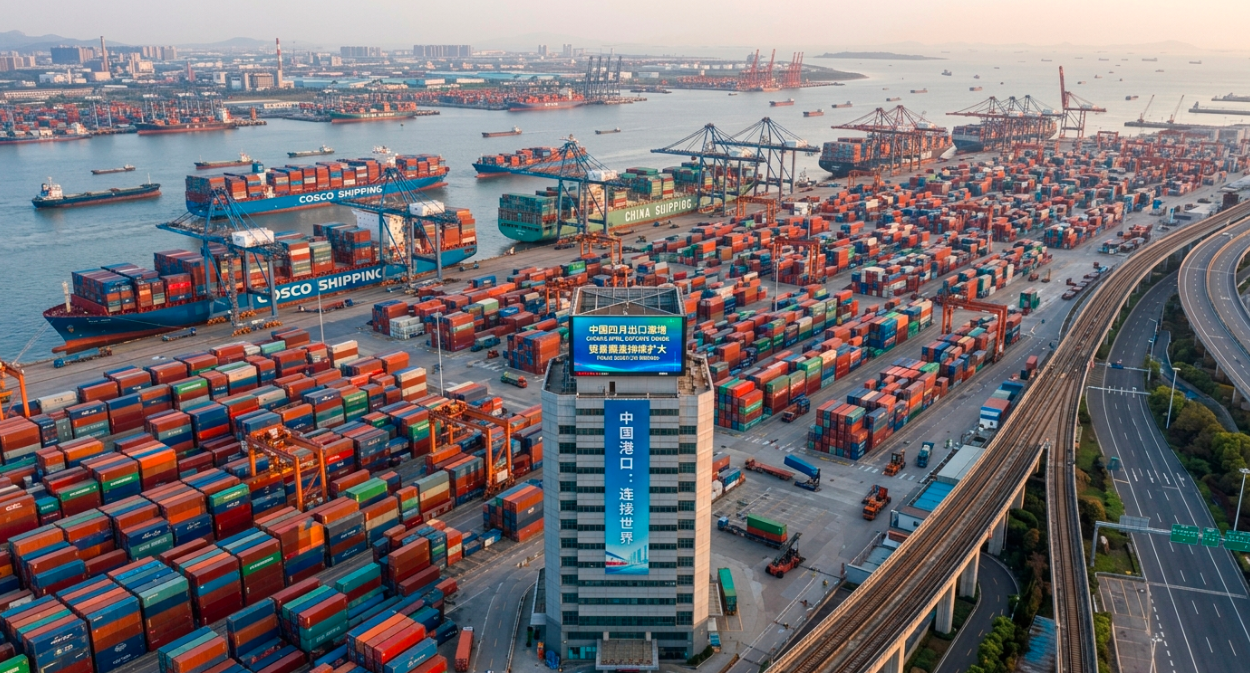
China’s economy delivered a major surprise in April as exports rebounded far more strongly than analysts expected, signaling that global demand for Chinese goods remains resilient despite geopolitical tensions and rising economic uncertainty.
Exports jumped 14.1% year-over-year in U.S. dollar terms, sharply higher than March’s sluggish 2.5% growth and well above economist forecasts. Imports also remained strong, while China’s trade surplus widened dramatically to $84.8 billion.
At first glance, the numbers suggest China’s manufacturing sector is regaining momentum. But the deeper story is far more complex.
A growing number of overseas buyers are rushing to secure Chinese goods before rising oil prices, shipping costs, and geopolitical instability potentially make global trade far more expensive later this year.
China’s April Export Growth Shocked Analysts
China’s latest customs data revealed one of the strongest export performances in recent months.
Key April Trade Numbers
- Exports rose 14.1% year-over-year
- Imports climbed 25.3%
- Trade surplus widened to $84.8 billion
- March trade surplus had stood at $51.13 billion
The export growth far exceeded market expectations and reflected a sudden acceleration in overseas demand for Chinese-made products.
Factory activity data published earlier had already hinted at rising export orders, but the scale of the rebound still surprised many economists.
Why Global Buyers Are Rushing to Chinese Factories
The rebound is not only about stronger global demand.
Many companies appear to be stockpiling goods because they fear the Iran conflict could disrupt global trade routes and push energy costs significantly higher.
Businesses Fear Rising Costs Ahead
Importers across Europe, North America, and Asia are trying to secure:
- Electronics
- Industrial machinery
- Manufacturing components
- Chemicals
- Consumer goods
before shipping and production costs rise further.
This “buy now before prices rise” behavior is helping fuel China’s export boom.
Fear of Supply Chain Disruptions Is Growing
Global businesses remain deeply concerned about:
- Higher oil prices
- Shipping bottlenecks
- Delays at ports
- Increased freight costs
- Future shortages of industrial materials
China is benefiting because it still operates as the world’s largest manufacturing hub.
China’s Manufacturing Dominance Remains Intact
Despite years of global discussions about reducing dependence on Chinese manufacturing, April’s data shows China still plays a critical role in global supply chains.
Massive Industrial Capacity Gives China an Edge
China can produce huge quantities of goods faster than almost any other country.
Large industrial zones allow suppliers, assembly plants, and shipping infrastructure to work together efficiently.
Integrated Supply Chains Make Production Faster
China’s manufacturing ecosystem is deeply connected.
Factories often operate near component suppliers, reducing production delays and transportation costs.
Competitive Pricing Still Attracts Buyers
Chinese manufacturers continue offering lower-cost production through scale, government support, and efficient logistics.
This makes it difficult for many countries to fully replace Chinese suppliers.
The Trade Surplus Looks Strong — But There’s a Hidden Weakness
While China’s expanding trade surplus appears positive, it also highlights a key weakness inside the domestic economy.
Domestic Consumption Still Looks Fragile
Recent economic data showed:
- Retail sales remained weaker than expected
- Unemployment edged higher
- Consumer confidence stayed uneven
- Industrial output outperformed household spending
This means China is still relying heavily on exports to support growth rather than strong domestic consumption.
Why Weak Consumer Spending Matters
A healthy economy usually depends on balanced growth between exports and domestic demand.
Right now, China’s recovery appears heavily dependent on external demand from overseas buyers.
That creates risks if global demand slows later this year.
Imports Are Rising for an Important Reason
China’s import growth also exceeded expectations.
Imports climbed 25.3% in April, suggesting factories are increasing purchases of raw materials and industrial inputs.
What China Is Importing
Chinese manufacturers are buying more:
- Energy products
- Industrial metals
- Machinery parts
- Chemicals
- Manufacturing components
Part of this increase likely reflects companies preparing for continued production growth.
Stockpiling Could Be Driving Import Demand
Some businesses may also be importing aggressively now because they expect future price spikes tied to oil markets and geopolitical tensions.
That strategy helps companies avoid higher costs later.
Rising Oil Prices Could Become China’s Biggest Threat
One of the biggest risks facing China’s economy is energy inflation.
China imports enormous amounts of oil and raw materials. If Middle East tensions escalate, rising fuel prices could hit Chinese factories hard.
Higher Oil Prices Affect Global Manufacturing
Energy costs influence:
- Shipping prices
- Manufacturing expenses
- Transportation costs
- Chemical production
- Consumer goods pricing
Even strong exports can weaken if rising production costs eventually reduce global consumer demand.
The Iran Conflict Is Adding Economic Pressure
Businesses worldwide are watching the Middle East closely because prolonged conflict could destabilize global shipping routes and energy markets.
That uncertainty is now influencing trade decisions across multiple industries.
U.S.-China Relations Still Shape the Global Trade Outlook
Another major factor is the expected meeting between U.S. President Donald Trump and Chinese President Xi Jinping.
Trade Cooperation May Improve Slightly
Analysts expect discussions around:
- Agricultural trade
- Aircraft parts
- Industrial goods
- Supply chain cooperation
However, deeper strategic tensions remain unresolved.
Major Political Risks Still Exist
Key disputes continue over:
- Taiwan
- Technology restrictions
- Semiconductor access
- Military competition
- Industrial subsidies
Even if trade talks improve temporarily, long-term rivalry between Washington and Beijing is unlikely to disappear.
What This Means for Businesses and Consumers
China’s export rebound matters far beyond Beijing.
What It Means for Businesses
Companies may continue accelerating orders to protect themselves against:
- Supply chain disruptions
- Rising freight costs
- Energy-driven inflation
- Manufacturing delays
Businesses that depend heavily on imports could face higher operating costs later this year.
What It Means for Consumers
Consumers worldwide could eventually see:
- Higher prices on imported goods
- More expensive electronics
- Rising transportation costs
- Increased inflation pressure
The current export surge may partly reflect companies trying to avoid future price shocks.
Future Outlook for China’s Economy
China’s economic momentum now depends heavily on several global factors.
Middle East Stability Will Be Critical
If geopolitical tensions ease, panic-driven stockpiling could slow significantly.
If conflict escalates further, export demand may remain strong temporarily while long-term economic risks increase.
Domestic Consumption Needs to Improve
China’s government may eventually need stronger stimulus measures if consumer spending remains weak.
Without stronger household demand, the economy stays vulnerable to changes in global trade conditions.
Global Demand Could Slow Later in 2026
If rising oil prices hurt consumers worldwide, demand for manufactured goods could weaken in the second half of the year.
That would put renewed pressure on Chinese exporters.
FAQs
Why did China’s exports rise so sharply in April?
Chinese exports surged because overseas buyers accelerated purchases amid fears that the Iran conflict could increase shipping and energy costs later this year.
Why is China’s trade surplus important?
China’s trade surplus reflects the country’s dominant role in global manufacturing and international supply chains.
Is China’s economy fully recovering?
Not completely. Export activity is strong, but domestic consumption and retail sales remain weaker than expected.
Could rising oil prices hurt China?
Yes. China depends heavily on imported energy, and higher oil prices increase manufacturing and transportation costs.
Will U.S.-China trade tensions improve?
Some short-term trade cooperation is possible, but major geopolitical disputes between the two countries remain unresolved.

 Business