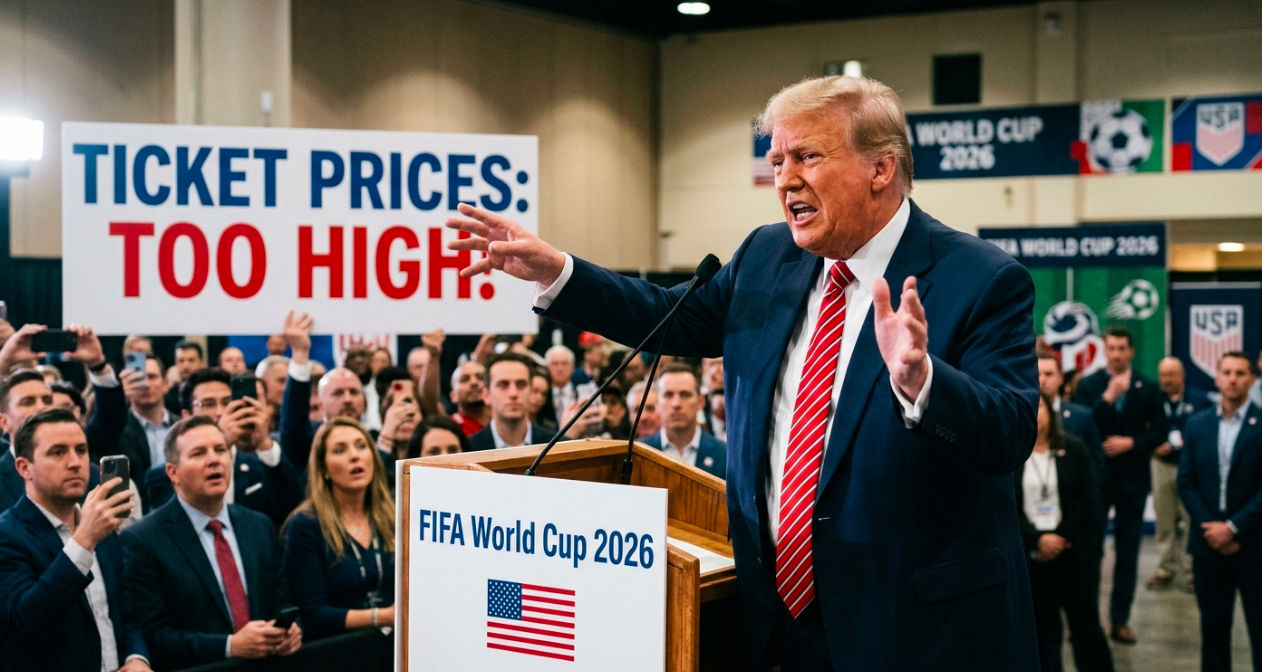
When Donald Trump joked that he “wouldn’t pay” a reported $1,000 ticket price to watch the United States open its 2026 World Cup campaign against Paraguay, the line immediately went viral.
But beneath the headline was a far more serious issue: the growing cost of attending live sports in America — and whether the 2026 FIFA World Cup is becoming an event ordinary fans may struggle to afford.
The comment struck a nerve because it touched on something millions of sports fans already feel. Watching major events in person is increasingly becoming a luxury experience rather than a community one. For a tournament marketed as a global celebration of football, that raises difficult questions about accessibility, fairness, and the future of sports fandom.
As the United States prepares to co-host the largest World Cup in history alongside Canada and Mexico, ticket pricing has suddenly become more than just a sports story. It is now part of a wider debate about commercialization, fan culture, and who mega-events are really built for.
Trump’s Remark Was More Than a Joke
Trump’s response was politically sharp because it connected with ordinary fans instantly.
A four-figure ticket for a group-stage match feels extreme to many Americans — especially families hoping to attend together. Even if the highest prices represent premium seating or resale listings, the headline number alone creates the perception that average supporters are being priced out.
That matters because the 2026 FIFA World Cup is not just another sporting event. It is being presented as a defining moment for soccer in America.
For decades, the United States has tried to transform football from a niche sport into a mainstream cultural force. Youth participation exploded. European leagues gained huge American audiences. Major League Soccer expanded rapidly. Then came the arrival of global stars like Lionel Messi in American club football.
The 2026 tournament was supposed to be the payoff — the moment everyday Americans embraced the World Cup experience firsthand.
Instead, ticket pricing risks turning that dream into a premium entertainment product reserved mainly for wealthy travelers, corporate clients, and resale speculators.
External Source: BBC POST
Explore More About Sport
Why World Cup Tickets Are So Expensive
There are several reasons prices have surged so dramatically.
1. The United States Sports Market Is Already Expensive
FIFA argues that prices reflect the realities of the American sports economy.
In the U.S., attending elite sporting events has become notoriously costly. NFL playoff tickets, NBA Finals seats, and Super Bowl packages routinely reach thousands of dollars. FIFA appears to believe World Cup demand will support similar pricing.
From a business standpoint, the strategy makes sense. The 2026 tournament will likely shatter revenue records. With expanded teams, more matches, and massive global demand, FIFA knows fans will compete aggressively for seats.
But there is a difference between maximizing revenue and preserving accessibility.
The World Cup historically carried a different identity than American pro sports. It was viewed as a global people’s tournament — a month-long festival where ordinary supporters from every economic background could participate.
Many fans fear that spirit is fading.
2. Dynamic Pricing Changes Everything
One of the biggest controversies involves dynamic pricing models.
Instead of fixed prices, ticket costs fluctuate based on demand, opponent popularity, and market behavior. Matches involving the U.S., Mexico, Brazil, or Argentina are expected to command especially high premiums.
That system benefits organizers financially but creates uncertainty for fans. A family planning months ahead may suddenly discover tickets cost far more than expected.
Critics argue this approach treats supporters less like loyal fans and more like airline customers navigating surge pricing.
3. The Resale Market Is Driving Prices Higher
Official resale platforms have also become a major flashpoint.
When tickets can legally be resold at inflated rates, prices quickly spiral beyond the original face value. Even if FIFA initially releases affordable seats, secondary market demand can push real-world costs dramatically higher.
This creates two separate World Cups:
- The advertised tournament with officially priced tickets
- The actual tournament most fans encounter after resale inflation
For international travelers already facing flights, hotels, food, and transportation expenses, inflated ticket prices can make attendance financially unrealistic.
The Real Cost Goes Beyond Tickets
The ticket itself is only part of the expense.
A fan traveling within the United States for the World Cup may face:
- Expensive domestic flights
- High hotel rates
- Increased rideshare and transportation costs
- Food and entertainment inflation near stadiums
For overseas visitors, currency exchange rates add even more pressure.
Consider a hypothetical family of four attending one U.S. group-stage game:
- Tickets: $2,000–$4,000 total
- Flights: $1,200+
- Hotel: $800–$2,000
- Food and local travel: $500+
The total can quickly exceed $5,000 for a single match experience.
That is no longer a casual sports outing. It becomes a major luxury purchase.
Why This Matters Beyond Sports
The controversy reflects a broader economic shift happening across entertainment industries.
Concerts, playoff games, festivals, and major live events increasingly rely on premium pricing strategies. Technology allows organizers to maximize every dollar consumers are willing to spend.
The problem is that emotional loyalty — once rewarded — now often becomes monetized.
Longtime supporters feel squeezed by systems designed around revenue optimization instead of fan inclusion.
That tension is especially dangerous for soccer in the United States because the sport is still growing culturally compared to football, basketball, and baseball.
If young fans associate the World Cup with unaffordable prices, the tournament could lose part of its long-term grassroots impact.
FIFA Faces a Difficult Balancing Act
Gianni Infantino has defended pricing by arguing that resale markets naturally emerge when tickets are underpriced.
There is truth to that argument.
If tickets are too cheap, scalpers often profit massively while organizers lose potential revenue. But many critics believe FIFA has gone too far toward commercial optimization.
The organization now faces competing priorities:
- Maximize tournament revenue
- Prevent ticket scalping
- Preserve accessibility
- Maintain public goodwill
- Grow the sport in North America
Those goals do not always align.
The challenge becomes even larger because the 2026 tournament is historic in scale. With 48 teams and 104 matches, FIFA expects unprecedented global demand.
That demand gives the organization enormous pricing power.
Explore More About Sport
What This Means for Fans
Ordinary Supporters May Need New Strategies
Fans hoping to attend the World Cup may need to approach the tournament differently than previous editions.
Some practical strategies include:
- Targeting less popular group-stage matches
- Considering host cities with lower travel costs
- Booking accommodation early
- Monitoring official affordable ticket releases
- Avoiding emotional impulse resale purchases
For many supporters, flexibility could become the key to affordability.
Local Fans Could Benefit Most
Ironically, Americans living near host cities may end up with the best opportunities.
Someone based near Los Angeles, Dallas, Atlanta, or New York could avoid major flight and hotel expenses, dramatically reducing overall costs.
International visitors face far steeper financial barriers.
Corporate Hospitality Will Expand
One likely outcome is a larger corporate presence at matches.
Luxury suites, sponsorship packages, and premium hospitality experiences generate huge profits. Expect FIFA and partners to lean heavily into high-end offerings.
That may create stadium atmospheres very different from past World Cups known for passionate working-class fan cultures.
Future Outlook
The 2026 FIFA World Cup could become a turning point for how global sports events are priced.
If stadiums remain full despite high costs, organizers across sports may view aggressive pricing as permanently validated. Future Olympics, World Cups, and international tournaments could become even more expensive.
But there is also risk.
Public backlash matters. Fan frustration can damage long-term trust and weaken emotional connections to events.
FIFA may ultimately face pressure to:
- Expand affordable ticket categories
- Limit resale markups
- Increase local fan access
- Create lottery systems for lower-income supporters
The tournament’s success will not only be measured by television ratings or profits. It will also depend on whether ordinary fans feel included in the experience.
That is why Trump’s offhand comment resonated so strongly.
People were not reacting only to him. They were reacting to a growing fear that live sports are becoming financially out of reach.
Could Affordable Tickets Still Exist?
Yes — but availability will likely be limited.
FIFA has already introduced lower-cost ticket categories for certain matches. However, demand for those seats is expected to be intense.
Fans should understand an important reality:
The cheapest advertised ticket is not necessarily the typical ticket most people will actually obtain.
By the time resale markets activate and demand surges, real-world prices can rise dramatically.
That gap between marketing and reality is fueling much of the criticism.
The Bigger Cultural Question
There is another issue quietly emerging beneath the financial debate.
Who is the modern World Cup for?
Historically, football thrived because it belonged to everyone. Rich and poor supporters could share the same stadium experience.
As mega-events become more corporate, that identity changes.
The 2026 World Cup has the potential to become either:
- A defining people-powered football celebration in North America
- Or a premium global entertainment spectacle accessible mainly to wealthier audiences
The difference matters because sports culture is built on participation, not just viewership.
FAQs
Why are 2026 World Cup tickets so expensive?
Prices are rising because of high demand, dynamic pricing systems, resale markets, and FIFA’s effort to maximize revenue in the lucrative U.S. sports market.
Did Trump actually criticize FIFA ticket prices?
Trump said he “wouldn’t pay it either” when discussing reports of $1,000 tickets for the U.S. opener. His comments highlighted wider concerns about affordability for ordinary fans.
Will there be cheaper World Cup tickets available?
Yes. FIFA has released some lower-cost ticket categories, but availability is expected to be limited and demand extremely high.
Why is the U.S. World Cup expected to cost more than previous tournaments?
Travel costs, hotel prices, transportation expenses, and the American sports entertainment market all contribute to higher overall spending for fans.
Could FIFA change its pricing strategy?
Potentially. Public criticism and political pressure could push FIFA toward expanding affordable options or limiting resale markups, especially if backlash intensifies.

 Sports