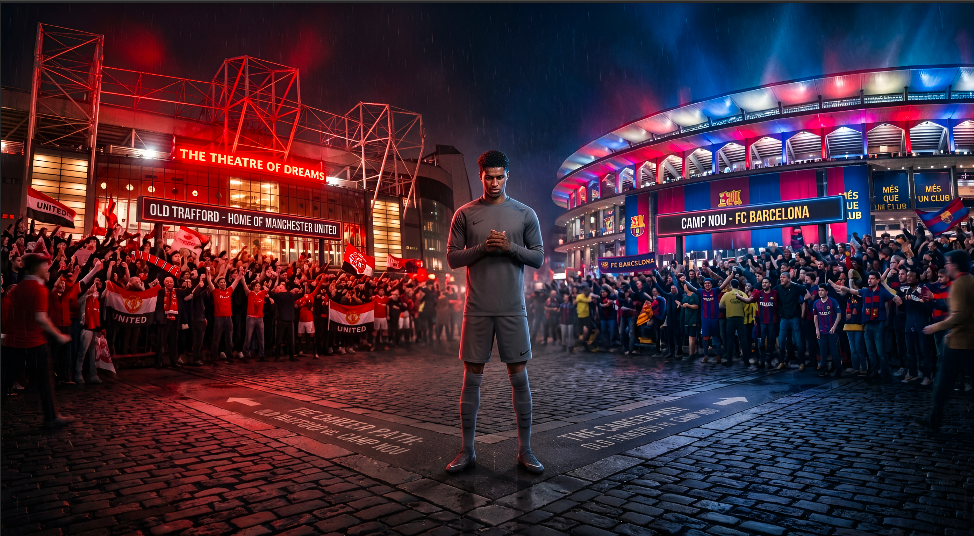
The idea of Marcus Rashford in a FC Barcelona shirt is the kind of transfer rumor that instantly captures global attention. It blends elite talent, historic prestige, and a narrative of reinvention. But beneath the excitement lies a more complicated reality—one that makes patience not just advisable for Rashford, but essential.
This isn’t just about one transfer window or one club. It’s about career trajectory, timing, financial realities, and football philosophy. And for fans, analysts, and even casual observers, understanding why Rashford must wait could explain far more about modern football than any headline transfer ever will.
The Temptation of Barcelona: More Than Just a Move
Barcelona remains one of the most attractive destinations in football. Even during periods of instability, its identity—built on technical excellence, attacking football, and global influence—continues to draw top players.
For Rashford, the appeal is obvious:
- A chance to play in La Liga
- Exposure to a different tactical system
- A fresh narrative after fluctuating form at Manchester United
But desire alone doesn’t make a transfer viable—or smart.
Barcelona today is not the same institution that once signed stars without hesitation. Financial constraints, squad rebuilding, and a long-term youth-focused strategy complicate any high-profile move.
Timing Is Everything in Modern Football
Transfers aren’t just about talent—they’re about timing.
Why This Moment May Not Be Right
Rashford’s career is at a delicate stage:
- He’s no longer a prospect; he’s expected to deliver consistently
- His role at Manchester United remains significant
- His form has fluctuated, raising questions about consistency
A move to Barcelona now could amplify pressure rather than relieve it.
Barcelona, meanwhile, is in a transitional phase under evolving tactical frameworks. Players joining during such periods often struggle unless they fit perfectly from day one.
The Risk of Moving Too Soon
History is filled with talented players who moved to big clubs at the wrong time and never fully settled. The issue isn’t ability—it’s context.
Rashford thrives in space, in transitions, and when given freedom. Barcelona traditionally demands:
- Positional discipline
- Quick, intricate passing
- High football IQ within a structured system
Adapting takes time—and patience is easier when you’re already established, not searching for form.
Related Topic:Top Underrated Football Players to Watch in 2026 | Rising Football Stars
Barcelona’s Financial Reality: A Hidden Barrier
One of the biggest factors often overlooked in transfer speculation is financial feasibility.
Barcelona has faced well-documented financial restrictions in recent years. Even if interest exists, executing a deal is another matter entirely.
Key Constraints
- Wage structure limitations
- Financial Fair Play considerations
- Priority spending on other positions
Signing Rashford would likely require:
- Player sales
- Wage compromises
- Strategic timing across transfer windows
That means even if both sides are interested, the move may not be immediately possible.
Tactical Fit: A Question That Can’t Be Ignored
Football isn’t just about star power—it’s about systems.
Where Would Rashford Play?
At Barcelona, Rashford would likely compete for:
- Left-wing positions
- Rotational attacking roles
But Barcelona already invests heavily in young, dynamic attackers. Integrating another high-profile forward could disrupt balance unless he clearly elevates the system.
Style Differences
At Manchester United, Rashford often benefits from:
- Counter-attacking setups
- Direct runs behind defenses
- Space to exploit
At Barcelona, the emphasis is different:
- Possession-heavy football
- Tight spaces
- Structured movement
This doesn’t mean Rashford can’t adapt—but adaptation takes time, and immediate success isn’t guaranteed.
Why Patience Benefits Rashford Personally
Patience isn’t passive—it’s strategic.
1. Time to Stabilize Form
Rashford has shown he can reach elite levels. What he needs now is consistency. Staying put allows him to:
- Rebuild confidence
- Refine decision-making
- Deliver sustained performances
A strong, consistent season would increase his leverage in any future move.
2. Stronger Negotiating Position
Players who move from a position of strength:
- Secure better contracts
- Have more control over their role
- Face less scrutiny
If Rashford peaks again at Manchester United, he doesn’t chase Barcelona—Barcelona chases him.
3. Reduced Pressure
Joining a club like Barcelona during a period of personal uncertainty can magnify criticism. Waiting allows Rashford to:
- Arrive as a solution, not a gamble
- Avoid being labeled a “risk signing”
Manchester United Factor: Still a Crucial Piece
It’s easy to assume a player must leave to progress—but that’s not always true.
At Manchester United, Rashford still has:
- A defined role
- Familiar surroundings
- Fan support (even if sometimes critical)
If the club stabilizes tactically and structurally, Rashford could thrive again without needing a transfer.
Leaving too early could mean abandoning a system where he already understands the expectations.
What This Means
For readers and fans, this situation highlights a broader truth about football:
Not every exciting transfer is a smart one.
Rashford’s patience matters because it reflects:
- The importance of career timing
- The complexity behind modern transfers
- The balance between ambition and strategy
For young players watching, the takeaway is clear: moving to a bigger club isn’t always progress—sometimes, growth happens where you are.
For fans, it’s a reminder to look beyond headlines and consider context. Transfers aren’t just about “who wants who”—they’re about fit, finances, and timing.
Future Outlook: What Happens Next?
Scenario 1: Rashford Rediscovers Peak Form
If Rashford delivers a strong season:
- Barcelona’s interest could intensify
- Other elite clubs may enter the race
- He gains full control over his next move
This is the ideal scenario for long-term success.
Scenario 2: Barcelona Stabilizes Financially
If Barcelona resolves financial constraints:
- They can pursue targets more aggressively
- Rashford becomes a more realistic option
Timing could align naturally without forcing a rushed move.
Scenario 3: The Move Never Happens
Not every rumored transfer materializes—and that’s fine.
Rashford could:
- Rebuild his legacy at Manchester United
- Explore other leagues or clubs better suited tactically
Sometimes the best move is the one that doesn’t happen.
FAQs
1. Is Barcelona seriously interested in Marcus Rashford?
Interest has been reported at various points, but real transfers depend on finances, squad needs, and timing. Interest alone doesn’t guarantee a move.
2. Would Rashford fit Barcelona’s playing style?
He has the technical ability, but adapting to Barcelona’s structured, possession-based system would take time and tactical adjustment.
3. Why shouldn’t Rashford push for a transfer now?
Because his current form and Barcelona’s financial situation make it a high-risk move. Waiting improves both his performance level and transfer conditions.
4. Could staying at Manchester United benefit him more?
Yes. Stability, consistent minutes, and a familiar system can help him regain top form—making any future move stronger and more strategic.
5. When would be the right time for a move?
After a full season of consistent performance and when Barcelona—or any interested club—is in a stable position to integrate him effectively.
The Bigger Picture
The conversation around “Rashford Barcelona future” isn’t just about a transfer—it’s about understanding how elite careers are built.
Patience isn’t hesitation. It’s positioning.
For Marcus Rashford, waiting might not feel exciting in the short term—but it could define the success of the next chapter of his career.

 Sports