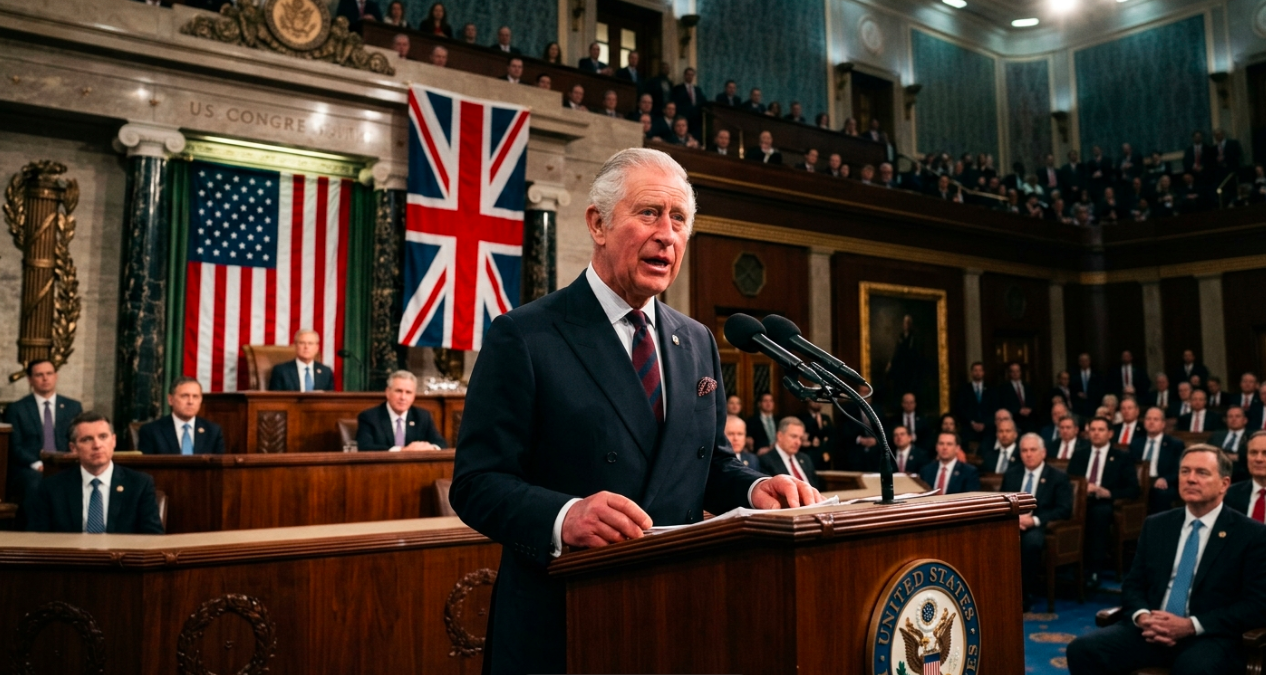
When King Charles III stood before the United States Congress and described the U.K.–U.S. relationship as “truly unique,” it wasn’t just ceremonial language—it was a strategic message aimed at a world that is becoming less predictable by the day.
At a time of geopolitical tension, economic fragmentation, and shifting alliances, this speech was less about celebrating history and more about redefining relevance. Behind the applause and symbolism lies a harder truth: the so-called “special relationship” is being tested—and needs active reinforcement to survive.
A Historic Speech in a Fragile Moment
King Charles’ address came during a high-stakes state visit designed to strengthen ties that have recently faced strain. His call for unity emphasized shared democratic values, even as disagreements over global conflicts and policy priorities linger.
The timing is critical:
- Rising tensions in the Middle East
- Ongoing war dynamics in Europe
- Policy disagreements between U.S. and U.K. leadership
- Growing global competition, especially with China
This is why the speech matters—it attempts to stabilize a relationship that is no longer automatically stable.
Understanding the “Truly Unique” Relationship
The U.K.–U.S. alliance—often called the “special relationship”—dates back decades, rooted in shared wars, intelligence cooperation, and economic alignment.
But calling it “truly unique” signals something deeper: a need to reaffirm its importance in a changing world.
What makes it unique?
1. Intelligence Dominance
The backbone of this alliance is intelligence sharing through the Five Eyes network.
- A decades-old system of real-time intelligence exchange
- Built on trust that goes beyond formal treaties
- Considered one of the most advanced intelligence alliances globally
This cooperation shapes everything from counterterrorism to cyber defense.
2. Military Integration
The two nations have fought side by side in:
- World War II
- The Cold War
- Modern conflicts in the Middle East
Their military systems are deeply interoperable, meaning they can operate almost as one force.
3. Economic and Technological Ties
From finance to AI, both countries influence:
- Global markets
- Digital infrastructure
- Innovation ecosystems
But this area is now evolving rapidly, especially as protectionism rises.
Why King Charles’ Message Matters Now
1. The Alliance Is Under Pressure
Despite strong historical ties, cracks are visible.
- Policy disagreements over Iran and military cooperation
- Trade tensions and tariff threats
- Different global priorities between U.S. and U.K. leadership
Even U.S. officials have acknowledged the relationship “is not what it was.”
This makes Charles’ speech less about celebration—and more about repair.
2. A Message to Rivals and Allies
The speech wasn’t only aimed at Americans.
It also sends a signal globally:
- To rivals: Western alliances remain intact
- To allies: cooperation still works
- To markets: stability is still possible
In geopolitics, perception matters as much as policy.
3. The Monarchy as a Diplomatic Tool
Unlike elected leaders, King Charles III operates above politics.
That gives him a unique advantage:
- He can reinforce relationships without triggering political backlash
- He provides continuity beyond election cycles
- He can focus on long-term global issues like climate change
This speech shows how modern monarchies still play a strategic role.
The Real-World Impact: Why This Matters to You
It’s easy to dismiss diplomatic speeches as distant events. But this one has real consequences.
Economic Stability
Strong alliances reduce uncertainty in global markets.
That affects:
- Inflation
- Fuel prices
- Job opportunities
When major allies coordinate, markets react positively.
Security and Technology
The U.K.–U.S. partnership influences:
- Cybersecurity standards
- AI regulations
- Surveillance and data policies
These decisions directly impact your digital life.
Global Conflicts
Unified alliances can:
- Prevent escalation
- Coordinate military responses
- Support smaller nations
This reduces the risk of wider conflicts that affect everyone.
What This Means
The Relationship Is Being Rewritten
This is no longer a Cold War-era alliance running on autopilot.
It must adapt to:
- New threats (cyber, AI, hybrid warfare)
- New competitors (China, regional powers)
- New economic realities
Unity Is Now a Strategic Choice
In the past, alignment between the U.K. and U.S. was assumed.
Today, it requires effort.
Charles’ speech is essentially a reminder:
cooperation is no longer guaranteed—it must be maintained.
Symbolism Still Has Power
Even in a data-driven world, symbolic gestures matter.
A monarch addressing Congress:
- Reinforces continuity
- Builds public support
- Signals long-term commitment
Expert Insight: A Subtle but Strategic Shift
What stands out is how carefully the message was framed.
Instead of focusing on:
- Past victories
- Historical nostalgia
The speech emphasized:
- Future cooperation
- Shared challenges
- Mutual responsibility
This reflects a broader shift in diplomacy—from heritage-based alliances to purpose-driven partnerships.
Future Outlook: Where the U.K.–U.S. Alliance Is Heading
1. Technology Will Define the Next Phase
Expect deeper collaboration in:
- Artificial intelligence
- Cybersecurity
- Space innovation
The next “special relationship” will likely be digital.
2. Climate Leadership Could Become Central
King Charles has long championed environmental issues.
This could push:
- Joint climate initiatives
- Green investment strategies
- Global environmental leadership
3. More Selective Economic Cooperation
Trade won’t disappear—but it will become more strategic.
Focus areas:
- Critical industries
- Supply chain resilience
- Energy security
4. Continued Military Alignment—With New Priorities
Traditional warfare is evolving.
Future cooperation will include:
- Cyber defense
- Intelligence warfare
- Indo-Pacific strategy
Internal Context & Deeper Read
For a broader breakdown of this state visit and its implications, see:
King Charles U.S. State Visit Meaning Explained
(For your internal article, you can directly use this link: https://usablogtoday.com/blogs/king-charles-us-state-visit-meaning)
Also External Source Context:
https://www.reuters.com/world/uk/king-charles
https://nypost.com/2026/04/28/us-news/king-charles-iii
What This Means (Quick Takeaways)
- The U.K.–U.S. alliance is still powerful—but no longer automatic
- King Charles’ speech is a strategic effort to reinforce unity
- Global instability makes strong alliances more important than ever
- The future of this relationship will be shaped by technology and security
FAQs
1. Why did King Charles address Congress?
It was part of a state visit aimed at strengthening diplomatic ties and reinforcing the U.K.–U.S. alliance during a period of global uncertainty.
2. What is the “special relationship”?
It refers to the close political, military, and economic partnership between the United Kingdom and the United States, built over decades of cooperation.
3. Is the U.K.–U.S. relationship weakening?
Not exactly—but it is evolving. Differences in policy and global priorities mean it requires more active effort to maintain.
4. What role does the Five Eyes alliance play?
The Five Eyes enables deep intelligence sharing, making it a cornerstone of the relationship and global security cooperation.
5. Why should ordinary people care?
Because this relationship affects global stability, economic conditions, and technological policies that directly impact everyday life.
Final Thought
King Charles’ speech wasn’t about nostalgia—it was about necessity.
In a world where alliances are increasingly tested, calling a relationship “truly unique” is not just praise. It’s a reminder that some partnerships still carry global weight—and that maintaining them may be more important now than ever.

 US
US