Introduction: A joke that revealed a political strategy
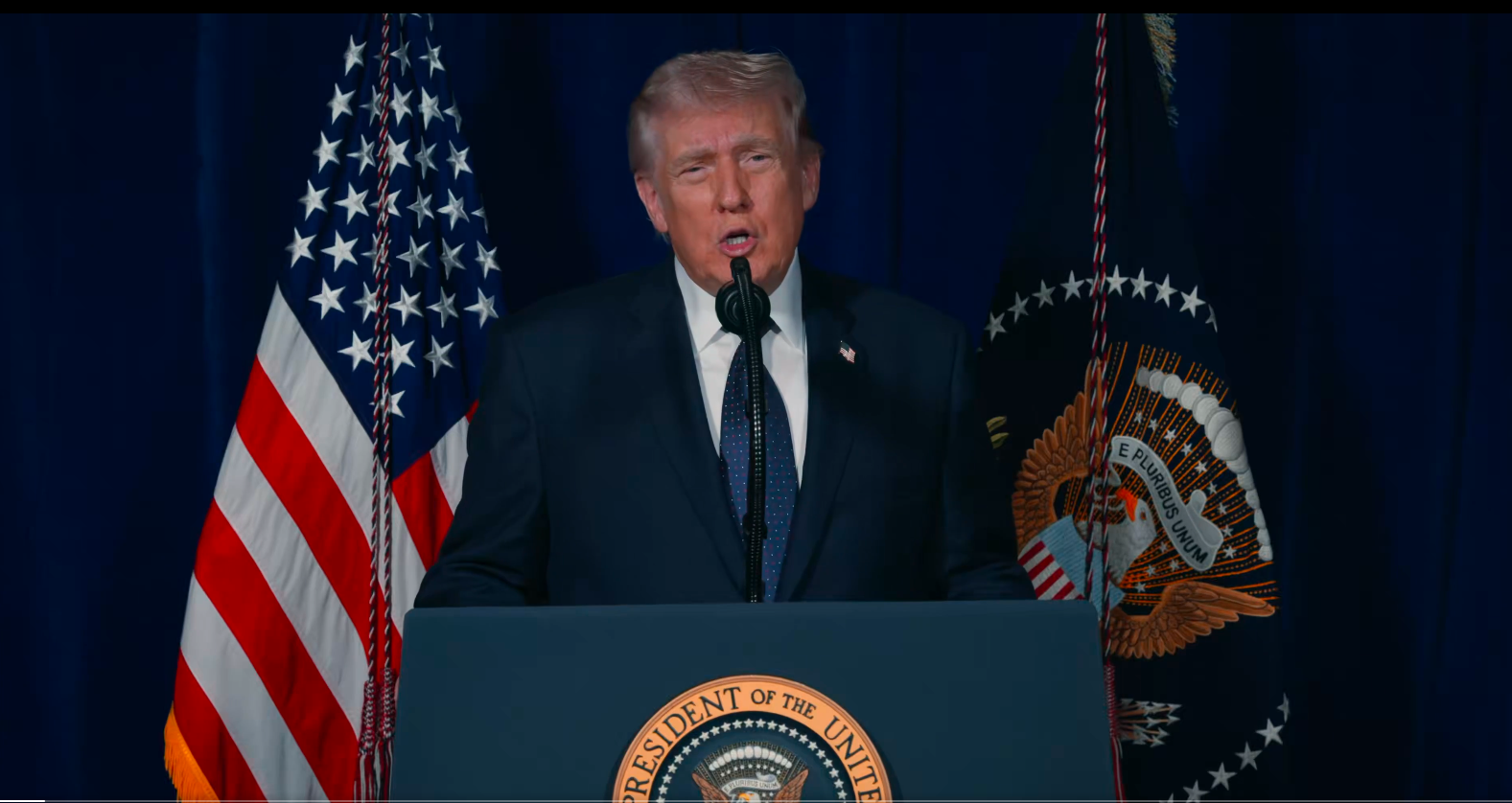
When Donald Trump stood before a cheering crowd in Florida and said, “They want me to be in a secure place. I said, ‘What’s a more secure place than The Villages?’” it sounded like a punchline.
But in political terms, it was not a joke—it was a signal.
The setting was The Villages, the largest retirement community in the United States, and one of the most politically active senior strongholds in the country. The moment captured something bigger than a rally speech. It revealed how modern American politics is increasingly shaped by geography, age demographics, and emotional comfort zones rather than traditional policy debates.
According to reporting patterns from Politico, the event was not just a campaign stop—it functioned as a political validation loop: Trump speaking to an audience already strongly aligned with him, reinforcing a feedback cycle of trust, grievance, and loyalty.
So why does this matter to anyone outside Florida? Because it shows where American politics is heading: toward sealed political environments where leaders and voters reinforce each other in highly concentrated spaces.
The Villages: Why a retirement community became a political fortress
At first glance, The Villages is simple: golf courses, gated neighborhoods, town squares, and retirees enjoying a climate-controlled lifestyle.
But politically, it behaves like something else entirely: a high-density voting machine.
A uniquely powerful demographic bloc
The Villages represents:
- Extremely high voter turnout rates
- Predominantly Republican-leaning seniors
- Strong social cohesion (clubs, events, shared media)
- Dense political discussion networks inside community spaces
Unlike scattered suburban voters, this is a concentrated ideological ecosystem.
That makes it strategically important—not just for Florida elections, but for national messaging.
Why Trump’s “secure place” comment matters more than it seems
On the surface, Trump’s remark about The Villages being “secure” refers to physical safety concerns in the context of heightened political tensions.
But politically, it operates on three deeper levels.
1. Emotional security over physical security
For many voters in The Villages, “security” is not only about protection—it is about:
- Stability in income (especially Social Security reliance)
- Predictable healthcare costs
- Cultural familiarity
- Resistance to rapid social change
Trump’s messaging consistently aligns with this definition of security.
2. Political safety bubbles
Modern campaigning increasingly happens in environments where:
- The audience agrees before the speech begins
- Opposition voices are minimal or absent
- Messaging is reinforced socially after the event
The Villages is a textbook example of this.
3. Strategic insulation
From a campaign perspective, rallying in such environments reduces risk:
- No hostile crowd dynamics
- High approval feedback loops
- Guaranteed media visuals of enthusiasm
This is politics optimized for certainty rather than persuasion.
External Source Context:
https://www.politico.com/
Seniors as the most reliable political infrastructure in America
The rally highlighted a central truth often under-discussed in national commentary: older voters are not just a demographic—they are an electoral infrastructure.
Why seniors matter disproportionately
In communities like The Villages:
- Voting participation can exceed national averages significantly
- Political preferences are stable over time
- Local networks amplify shared narratives quickly
A resident quoted in coverage expressed strong emotional alignment with Trump-era policies, particularly around taxation and cost of living relief.
This reflects a broader pattern: seniors often evaluate political performance through monthly economic stability rather than ideological debates.
Economic anxiety vs political perception
One of the most important tensions revealed in the rally is the gap between economic data and economic perception.
Florida has experienced:
- Rising housing costs
- Increased insurance premiums
- Migration-driven demand pressures
- Uneven inflation impacts
Yet many attendees described the economy as improving under Trump-era policies compared to the Biden period.
Why this perception gap exists
Three factors explain it:
1. Reference-point economics
People compare current conditions not to abstract statistics, but to prior lived experience.
2. Policy attribution confusion
Benefits like tax deductions or Medicare adjustments are often directly credited to the most visible political figure.
3. Media ecosystem segmentation
Different audiences consume entirely different economic narratives.
This is where analysis from outlets like Politico becomes important—it highlights how economic dissatisfaction and political satisfaction can coexist in the same population.
Florida as Trump’s political “home base”
Florida is no longer just a swing or battleground state in traditional terms. It functions as a symbolic and operational base for Trump-aligned politics.
Key structural advantages
- Large senior population
- High Republican registration in key counties
- Strong media ecosystem aligned with conservative messaging
- Political leadership pipeline tied to Trump endorsements
Figures like Rep. Byron Donalds (a Trump-backed candidate) illustrate how endorsement structures now shape political careers in the state.
The Villages acts as a microcosm of this system—predictable, mobilized, and emotionally aligned.
What This Means: The rise of “comfort politics”
The most important takeaway from the rally is not about Trump specifically—it is about a broader shift in political behavior.
Comfort politics defined
Comfort politics is when voters prioritize:
- Emotional familiarity over policy complexity
- Stability narratives over reform proposals
- Identity alignment over issue-by-issue evaluation
In environments like The Villages, political identity becomes socially reinforced daily.
Why this matters for the rest of the country
Even if you do not live in Florida, this model matters because:
- Campaign strategies increasingly target “safe political zones”
- Media narratives are shaped by high-engagement communities
- National elections are influenced by concentrated turnout hubs
This creates a political environment where persuasion becomes less important than mobilization.
Future Outlook: Where this political model is heading
Looking ahead, three major trends are likely:
1. More hyper-targeted political rallies
Candidates will increasingly speak in environments where audiences are already highly aligned.
2. Growth of demographic strongholds
Communities like The Villages will become even more influential as senior populations grow nationally.
3. Reduced cross-ideological persuasion
Politics will focus less on changing minds and more on activating existing supporters.
The implication is significant: elections may become less about undecided voters and more about turnout intensity within locked-in communities.
Comparative insight: The Villages vs traditional suburbs
Unlike traditional suburban swing areas:
- Suburbs fluctuate politically over time
- The Villages remains structurally consistent
- Suburbs reflect economic mobility shifts
- The Villages reflects retirement stability priorities
This makes The Villages less like a battleground and more like a political anchor point.
FAQs
1. Why did Trump say The Villages is a “secure place”?
It was both a security joke and a political signal—referring to physical safety concerns and the ideological comfort of a strongly supportive voter base.
2. Why is The Villages politically important?
Because it is one of the largest and most reliably voting-heavy senior communities in the U.S., making it a key electoral stronghold.
3. How does this rally affect Florida politics?
It reinforces Florida’s position as a Republican-leaning state with strong senior voter influence and growing alignment with Trump-endorsed candidates.
4. What role do seniors play in U.S. elections?
Seniors are one of the highest-turnout groups in America and heavily influence election outcomes, especially in swing and high-population states.
5. Is Florida still a swing state?
Not in the traditional sense. While some competitiveness remains, recent cycles show a stronger Republican lean, especially in statewide races.
Final perspective: Why this moment matters beyond Florida
The Trump rally in The Villages is not just a campaign snapshot. It is a case study in how modern political power is built inside emotionally and socially cohesive environments.
What once were retirement communities are now political ecosystems. What once were rallies are now reinforcement spaces. And what once were persuadable voters are increasingly becoming stable political identities.
For readers, the key insight is simple: the geography of politics is changing. And understanding places like The Villages is no longer optional—it is central to understanding where American democracy is headed next.

 US
US