Introduction
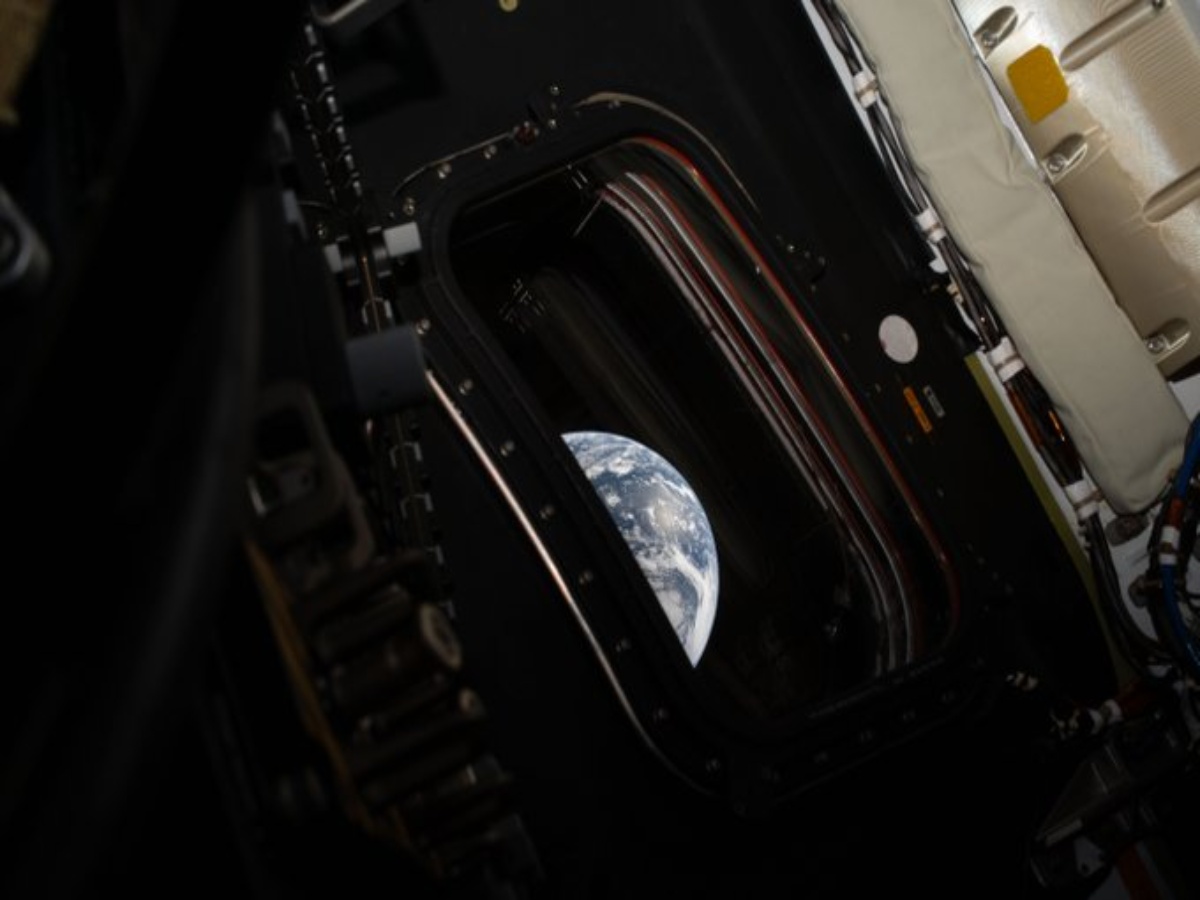
NASA’s Artemis II mission has delivered a historic first: astronauts have shared the first images captured during humanity’s return to lunar orbit. This milestone marks a major step in the United States’ ambitious Artemis program, aiming to establish sustainable lunar exploration and pave the way for future manned missions to Mars.
The photographs, taken aboard the Orion spacecraft during its multi-day lunar orbit, reveal detailed views of the Moon’s surface—including previously unphotographed regions near the South Pole. For Americans, these images represent a revival of national pride in space exploration, reminiscent of the Apollo era but equipped with modern technology, enhanced safety systems, and international collaboration.
Key Highlights
- Historic Photos Released: First astronaut-taken images of the Moon during Artemis II orbit.
- Crew Composition: Four astronauts, including first-time lunar mission specialists.
- Mission Duration: Planned for 10–14 days, completing multiple lunar orbits.
- Technology Milestone: Orion spacecraft and Space Launch System (SLS) rocket successfully tested in real-time manned operation.
- US Leadership in Space: Reinforces America’s commitment to returning humans to the Moon and maintaining global space leadership.
Artemis II Mission Full Details
Artemis II is NASA’s first manned lunar mission in over five decades, a direct continuation of the Artemis I unmanned test flight. The mission carries four astronauts aboard the Orion spacecraft, launched atop the SLS—the most powerful rocket NASA has ever produced.
The astronauts’ primary goal is to orbit the Moon safely while testing the spacecraft’s life-support, propulsion, and navigation systems under real conditions. During this mission, the crew is capturing high-resolution photographs of the lunar surface, providing both scientific data and public engagement material. These images include craters, lava plains, and polar regions that will inform Artemis III’s planned lunar landing.
NASA emphasizes the collaboration between government agencies and private aerospace companies. Orion’s advanced life-support and radiation protection systems were put to the test, ensuring astronauts can orbit the Moon and return safely. Additionally, the mission validated long-duration space travel protocols that will be crucial for future Mars missions.
The photographs taken during Artemis II are not only visually impressive—they offer scientists data on surface composition, illumination, and terrain features critical for landing site selection. NASA has indicated that images of the lunar South Pole are particularly valuable, as that region may host water ice deposits vital for long-term human presence.
For more information on NASA’s Artemis program, see NASA Artemis Program Overview, and for related US space milestones, explore James Webb Telescope Discoveries.
Technical and Operational Milestones
Artemis II’s success represents a leap in technology. The SLS rocket delivered Orion into precise orbit, while the spacecraft’s solar arrays, navigation systems, and onboard AI-assisted trajectory adjustments proved critical in orbiting the Moon.
Unlike Apollo-era missions, Artemis II includes enhanced radiation shielding, automated hazard detection, and real-time telemetry for mission control in Houston. Astronauts also tested emergency protocols for rapid return to Earth, setting a new safety benchmark.
The mission demonstrates NASA’s commitment to incremental progress: unmanned testing, followed by manned orbit, before eventual landing. Experts note that these incremental steps ensure safety and technological reliability, crucial for sustaining multi-billion-dollar lunar programs.
What This Means for Americans
Artemis II has implications far beyond space exploration. For American citizens, it underscores continued federal investment in science, technology, engineering, and mathematics (STEM). The mission supports thousands of jobs across NASA centers, private contractors, and research institutions, particularly in Florida, Texas, and Louisiana.
Local economies benefit from contracts and workforce expansion. For example, Kennedy Space Center in Florida relies on Artemis program contracts for shuttle assembly, maintenance, and astronaut support operations. Similarly, Michoud Assembly Facility in Louisiana is producing components critical to SLS construction.
In the education sector, the Artemis program inspires students in STEM fields, demonstrating tangible opportunities in aerospace engineering, robotics, and planetary science. Moreover, Americans can experience the excitement of lunar exploration firsthand through NASA’s public release of photos, videos, and interactive mission data.
Internationally, the mission signals US leadership and collaboration potential. Artemis II lays the groundwork for partnerships with ESA (European Space Agency), JAXA (Japan), and private companies like SpaceX, reinforcing America’s influence in global space policy and technology standards.
Expert Analysis and Unique Insights
NASA’s early release of astronaut images serves multiple purposes. Public engagement builds support and secures funding, while the images also provide real-time operational data. Experts emphasize that capturing lunar terrain in high resolution helps refine navigation algorithms, surface mapping, and landing simulations for Artemis III.
Unique insights include NASA’s strategic approach: by releasing images incrementally, the agency increases media coverage, inspires private sector investment, and maintains public excitement—vital factors for sustaining the decade-long Artemis program.
Predictions suggest Artemis II’s success may accelerate Artemis III, which could include the first woman and first person of color to land on the Moon. Analysts also indicate that commercial lunar operations could benefit, with companies like SpaceX leveraging data from Artemis II to plan cargo deliveries and resource mapping.
Furthermore, this mission may influence American technology policy. Innovations in propulsion, radiation shielding, and AI-assisted navigation could have dual-use applications in defense, satellite deployment, and commercial aerospace industries. The ripple effect could expand America’s technological edge and economic footprint in high-tech sectors.
Conclusion
Artemis II represents a pivotal moment in US space exploration history. The first lunar photos taken by astronauts are not only historic but serve as a practical blueprint for humanity’s future presence on the Moon—and ultimately Mars. For Americans, the mission signals renewed leadership in science, job growth, educational inspiration, and technological innovation.
As NASA continues its incremental approach—unmanned testing, manned orbit, and eventual lunar landing—the nation and the world can anticipate further achievements, including sustainable lunar bases and new discoveries in planetary science.
Social Engagement Hook
What do you think these first Artemis II images mean for America’s space future? Share your thoughts and favorite photos in the comments below! Tag a friend who loves space exploration.

 US
US