A Market Move That Didn’t Look Normal
In global markets, timing is everything. But sometimes, timing looks too perfect—and that’s when questions begin.
Over the past week, a wave of unusually large oil trades placed just before major geopolitical news has caught the attention of analysts, traders, and online investigators. The focus keyword—online sleuths are raising more red flags around suspiciously timed Iran-war oil trades—captures a growing concern: are these just sharp bets, or signals of something deeper inside the system?
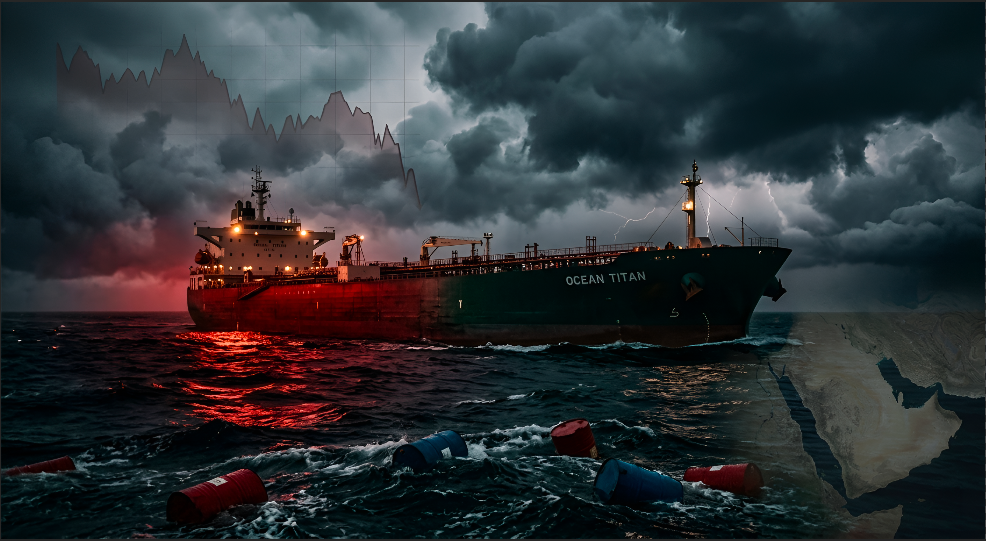
Massive short positions—bets that oil prices would fall—were reportedly opened shortly before news broke about potential progress toward ending tensions involving Iran. Within hours, oil prices dropped sharply, and those positions turned highly profitable.
That sequence alone doesn’t prove wrongdoing. But it does raise a serious question: who knew what, and when?
What Actually Happened in the Oil Market?
A Timeline That Sparked Suspicion
The concern isn’t just about profit—it’s about precision.
Large-scale short positions in crude oil appeared in low-liquidity hours, a time when such trades are uncommon. Shortly after, reports emerged suggesting progress toward easing geopolitical tensions. Oil prices reacted immediately, dropping sharply.
This pattern—large bets placed before market-moving news—has now appeared more than once in recent weeks.
Why This Stands Out
In normal conditions:
- Big trades are usually spread out to avoid detection
- Institutional players avoid thin trading hours due to risk
- Market-moving news is unpredictable
But here, the trades were:
- Concentrated
- Well-timed
- Highly profitable within hours
That combination is what’s raising red flags.
How Oil Prices React to War and Peace Signals
To understand why this matters, you need to understand how oil markets behave.
The Geopolitical Premium
Oil prices often include what’s called a “risk premium”—extra cost driven by uncertainty, especially in regions like the Middle East.
When conflict escalates:
- Supply fears push prices up
When peace seems likely:
- Risk fades, and prices move down
So when reports suggest a potential deal involving Iran, traders expect oil prices to fall—and many position themselves accordingly.
But Timing Is Everything
Placing a short trade after news breaks is normal.
Placing a massive short trade before the news? That’s where things get complicated.
The Bigger Question: Skill, Luck, or Information Advantage?
Scenario 1: Smart Money Anticipation
Some traders specialize in reading signals before the public does:
- Diplomatic patterns
- Satellite data
- Shipping movements
- Insider-level geopolitical analysis
It’s possible that experienced funds simply connected the dots faster than everyone else.
Scenario 2: Algorithmic Trading Edge
Modern markets are dominated by algorithms that:
- Scan thousands of data points in real time
- Detect subtle shifts in sentiment
- Execute trades within milliseconds
But even the best algorithms rely on available data—not future headlines.
Scenario 3: Information Leakage
This is where concerns intensify.
If traders acted on non-public, material information, it could suggest:
- Leaks from negotiations
- Early access to sensitive reports
- Weak controls around market-moving data
While there’s no confirmed evidence of this, the pattern is what fuels speculation.
Why Online Sleuths Are Paying Attention
The Rise of Crowd-Based Market Analysis
Retail investors and independent analysts now monitor markets in ways that were once limited to institutions.
Platforms like X (formerly Twitter), Reddit, and financial newsletters have created a new layer of scrutiny.
These “online sleuths” track:
- Unusual options activity
- Large futures trades
- Volume spikes in quiet hours
- Correlations between trades and news timing
And increasingly, they’re catching anomalies in real time.
Pattern Recognition Across Multiple Trades
This isn’t an isolated incident.
Recent weeks have seen multiple large oil trades placed just minutes—or hours—before significant geopolitical updates.
Individually, each could be coincidence.
Together, they form a pattern that’s hard to ignore.
Market Integrity vs Market Reality
What Regulators Typically Look For
Financial regulators monitor:
- Insider trading
- Market manipulation
- Abnormal trading patterns
But proving wrongdoing is extremely difficult.
Why?
Because traders can always argue:
- They acted on public signals
- Their models predicted the move
- The timing was coincidental
Without a direct link to leaked information, enforcement becomes challenging.
The “Gray Zone” Problem
Markets operate in a gray area where:
- Information advantages exist
- Access isn’t equal
- Speed creates power
This doesn’t always mean illegal behavior—but it does raise fairness concerns.
Real-World Impact: Why This Matters to You
1. Market Trust Is at Stake
If markets appear rigged—or even possibly rigged—confidence erodes.
Retail investors may feel:
- The system favors insiders
- Outcomes are predetermined
- Participation is risky
That perception alone can damage financial ecosystems.
2. Oil Prices Affect Everyday Life
Oil isn’t just a trading asset—it impacts:
- Fuel prices
- Transportation costs
- Food supply chains
- Inflation
A sudden 10–13% drop in oil prices can ripple across economies within days.
3. Volatility Creates Winners and Losers
While some traders made massive gains:
- Others faced sharp losses
- Hedging strategies broke down
- Energy stocks reacted unpredictably
This kind of volatility can destabilize portfolios quickly.
Expert-Style Breakdown: What’s Most Likely Happening?
A balanced view suggests this is likely a mix of factors:
- High-level anticipation by institutional traders
- Aggressive positioning ahead of expected news
- Possible information asymmetry, but not necessarily illegal
Markets are not perfectly fair—but they are highly competitive.
Those with better data, faster execution, and deeper analysis often win.
The real concern is when the gap becomes too wide.
What This Means
This situation highlights a critical shift in modern markets:
- Information moves faster than ever
- Trades happen before narratives form
- Retail investors are often reacting, not predicting
For everyday participants, the takeaway is clear:
- Don’t chase sudden moves
- Be cautious around geopolitical headlines
- Understand that volatility can be engineered—or amplified
This isn’t about avoiding markets—it’s about navigating them with awareness.
Future Outlook
Increased Scrutiny Is Coming
As patterns like this gain attention:
- Regulators may investigate unusual trades
- Data transparency could improve
- Market surveillance tools may evolve
More Volatility Ahead
Geopolitical tensions involving Iran remain fluid.
Even rumors of progress—or setbacks—can trigger:
- Sharp oil price swings
- Rapid capital flows
- Algorithm-driven reactions
The Rise of “Pre-News Trading”
One emerging trend is trading based on probability, not confirmation.
Funds are increasingly willing to:
- Take large positions ahead of expected news
- Accept higher risk for higher reward
- Use predictive modeling instead of reactive trading
This means similar situations are likely to happen again.
FAQs
1. Are these oil trades illegal?
Not necessarily. Large, well-timed trades are suspicious but not illegal on their own. Authorities would need proof of insider information or manipulation.
2. Why do oil prices drop when tensions ease?
Because the “risk premium” disappears. Less احتمال of supply disruption leads to lower prices.
3. Can retail investors benefit from these moves?
It’s difficult. By the time news becomes public, most of the price movement has already happened.
4. How can traders spot unusual activity?
Look for:
- Large trades during low-volume hours
- Sudden spikes in futures or options volume
- Market moves before news headlines
5. Will regulators step in?
If patterns continue, investigations are likely—but enforcement depends on evidence, not suspicion.
The Bottom Line
The debate around online sleuths raising more red flags around suspiciously timed Iran-war oil trades isn’t just about one trade or one headline.
It’s about how modern markets function in an era where information, speed, and capital collide.
Whether this turns out to be sharp trading or something more questionable, one thing is certain:
Markets are no longer just reacting to news—they’re increasingly moving before it.

 US
US