Introduction
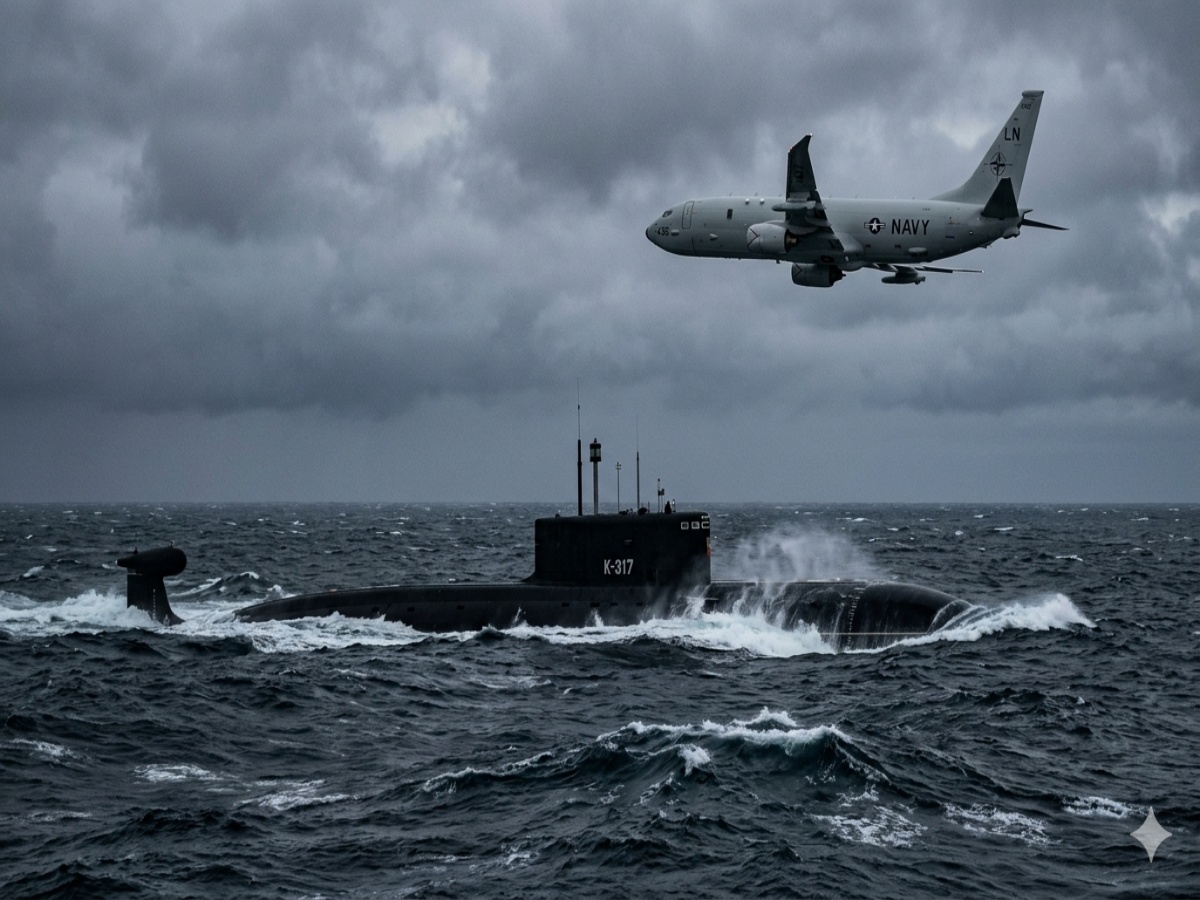
A newly revealed security incident in Europe is raising concerns far beyond the region. The United Kingdom has confirmed that three Russian submarines were detected operating near British waters, reportedly carrying out surveillance missions focused on critical infrastructure beneath the ocean.
While no direct confrontation occurred, the implications are significant—especially for the United States. With global communications, financial systems, and military coordination heavily reliant on undersea networks, this development is being viewed as more than just routine naval activity. Instead, analysts warn it could signal a broader shift toward covert underwater warfare.
Key Highlights
- 3 Russian submarines tracked near UK waters over several weeks
- Suspected mission: monitoring undersea cables and pipelines
- UK deployed naval ships and surveillance aircraft to track activity
- Raises concerns across NATO, including the United States
- Highlights vulnerability of global internet and financial infrastructure
Full Details: What Happened Near British Waters
According to UK defense sources, the submarines were detected operating in areas close to vital undersea infrastructure, including fiber-optic cables that connect Europe to North America. These cables handle the vast majority of global internet traffic and support critical services ranging from banking to military communications.
The operation reportedly involved a coordinated effort:
- One submarine acted as a decoy, drawing attention
- Two others focused on covert surveillance missions
- UK forces used advanced sonar systems and maritime patrol aircraft
Although the submarines remained outside UK territorial waters, their presence in nearby zones was enough to trigger a high-level security response.
This type of activity falls into what experts call “gray-zone operations”—actions that are aggressive but stop short of open conflict. These tactics are becoming increasingly common in modern geopolitics.
For verified reporting on this development, see:
👉 https://www.reuters.com/world/uk/uk-detects-russian-submarines-near-waters-2026-04-09/
Why Undersea Cables Are a Prime Target
Undersea cables are often overlooked, but they are among the most critical components of global infrastructure.
They carry:
- Over 95% of international data traffic
- Financial transactions worth trillions of dollars daily
- Military and intelligence communications
A successful attack or disruption could cause:
- Internet outages across continents
- Financial market instability
- Military coordination breakdowns
This growing vulnerability has been discussed in broader geopolitical analysis, including the shifting balance of power in Europe and its implications for Washington’s global strategy. For deeper insight, see:
👉 https://usablogtoday.com/blogs/us-influence-in-europe-at-stake-orbns-political-survival-in-question
Part of a Larger Pattern
This incident is not happening in isolation.
Over the past year:
- NATO has reported increased Russian naval activity in the Atlantic
- European officials have warned about potential infrastructure sabotage
- Intelligence agencies have flagged unusual movements near cable routes
These developments suggest a long-term strategy rather than a one-off mission.
Russia has consistently denied any wrongdoing, but Western officials remain skeptical, pointing to a pattern of behavior that aligns with strategic reconnaissance.
For NATO’s official perspective on maritime security, visit:
👉 https://www.nato.int/cps/en/natohq/topics_70759.htm
What This Means for the United States
Although the submarines were detected near the UK, the United States has a direct stake in the situation.
1. Economic Impact
The US economy depends heavily on transatlantic data flows. Any disruption to undersea cables could:
- Slow financial transactions
- Disrupt cloud services
- Impact global trade
Even a temporary outage could result in billions of dollars in losses.
2. National Security Concerns
Military operations rely on secure communication networks. Undersea cables play a key role in:
- Intelligence sharing
- Command coordination
- Real-time data transmission
If these systems are compromised, it could weaken US military readiness.
3. Increased Defense Spending
Incidents like this often lead to:
- Higher military budgets
- Investment in anti-submarine technologies
- Expanded NATO naval patrols
This could have long-term implications for US taxpayers and defense priorities.
4. Strategic Influence in Europe
The stability of Europe is directly tied to US global influence. As tensions rise, Washington may face increasing pressure to reinforce its presence in the region.
This dynamic is already being explored in geopolitical discussions about Europe’s political future and US involvement:
👉 https://usablogtoday.com/blogs/us-influence-in-europe-at-stake-orbns-political-survival-in-question
Expert Analysis: Why This Is Happening Now
Testing NATO Capabilities
One of the most likely explanations is that Russia is testing NATO’s response systems. By operating near UK waters, it can:
- Measure detection speed
- Analyze coordination between allies
- Identify weaknesses in surveillance
Psychological Strategy
Beyond physical objectives, these missions serve a psychological purpose:
- Creating uncertainty among Western nations
- Demonstrating Russia’s reach and capabilities
- Sending a message without direct confrontation
Preparation for Future Scenarios
Some analysts believe this is part of a long-term strategy to prepare for potential conflicts.
This could involve:
- Mapping critical infrastructure
- Identifying vulnerabilities
- Developing contingency plans
In this sense, the operation is less about immediate action and more about future readiness.
Unique Insight: The Silent Battlefield Beneath the Ocean
What makes this situation particularly important is the shift toward underwater warfare.
Traditionally, military power was measured by visible assets:
But today, the focus is shifting to less visible domains:
- Cyber warfare
- Space-based systems
- Undersea infrastructure
The ocean floor is becoming a strategic battleground, where small, covert actions can have massive global consequences.
For the United States, this means rethinking defense strategies:
- Investing in AI-powered detection systems
- Strengthening alliances with maritime nations
- Enhancing protection for critical infrastructure
Conclusion
The detection of three Russian submarines near the UK is a reminder that modern security threats are evolving in ways that are not always visible. While the incident did not lead to direct conflict, it highlights vulnerabilities that could have far-reaching consequences for the United States and its allies.
As geopolitical tensions continue to rise, the focus is increasingly shifting beneath the surface. The challenge for the US and NATO will be to adapt quickly to this new reality, where the next major threat may come not from the skies or land, but from the depths of the ocean.

 US
US